What Is ITSM?
- itsmacademy
- Apr 6
- 2 min read
Updated: Apr 9
Understanding IT Service Management
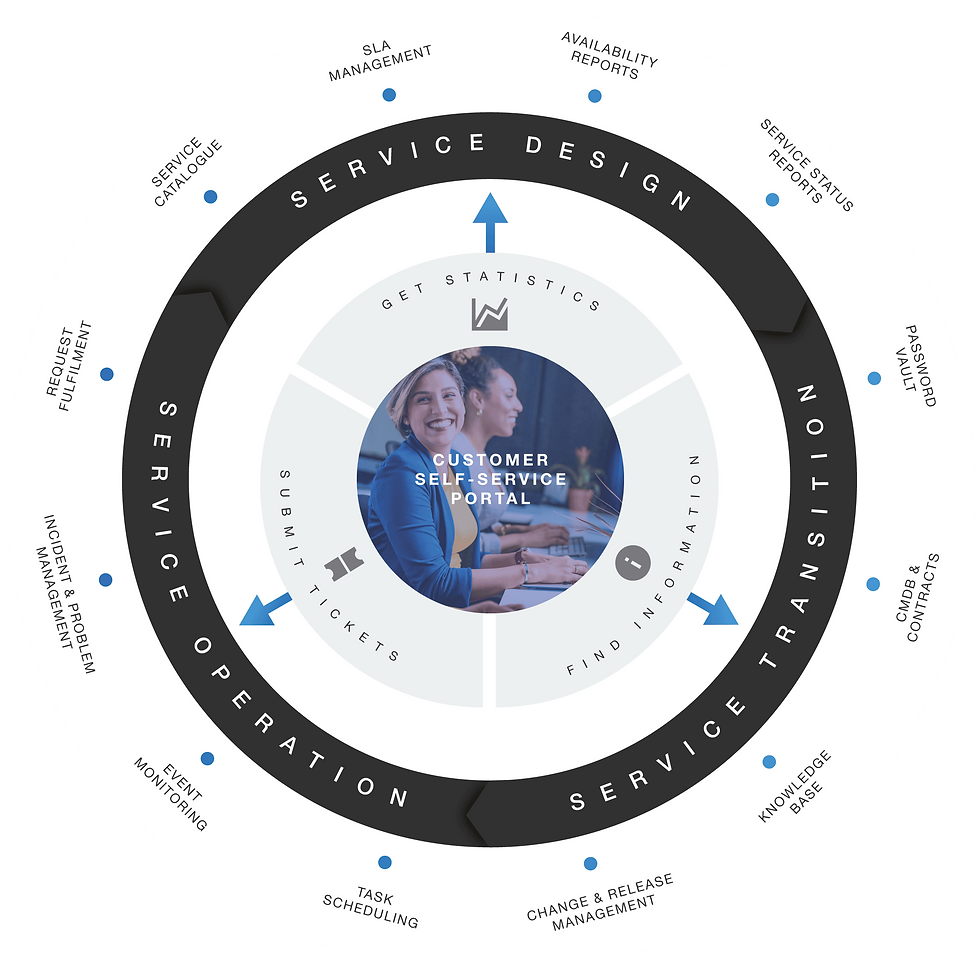
IT Service Management (ITSM) is a framework of practices designed to plan, deliver, operate, and continuously improve IT services within an organization. ITSM ensures that IT services align with business goals while providing an efficient, user-centric experience.
In today’s digital landscape, ITSM is essential for organizations seeking to streamline IT operations, enhance service quality, and improve employee and customer satisfaction.
Key Benefits of ITSM
Implementing ITSM delivers tangible benefits across IT operations:
Improved efficiency: Automates repetitive tasks and standardizes workflows.
Enhanced user experience: Faster response to incidents and service requests.
Better risk management: Integrates controls and compliance checks throughout the IT lifecycle.
Strategic IT planning: Aligns IT initiatives with overall business objectives.
Core ITSM Processes
ITSM organizes IT operations into structured processes, including:
Incident Management: Quickly resolves IT issues to minimize downtime.
Problem Management: Identifies root causes to prevent recurring issues.
Change Management: Ensures controlled and safe updates to IT systems.
IT Asset Management (ITAM): Tracks hardware, software, and cloud resources.
Service Request Management: Streamlines requests for access, licenses, or new equipment.
By standardizing these processes, organizations can reduce errors, improve accountability, and deliver faster, more reliable IT services.
ITSM Tools and Solutions
Effective ITSM relies on specialized software to manage workflows, monitor performance, and report on service levels. Popular ITSM tools, such as Cockpit IT Service Manager, centralize IT operations and typically include:
Incident and problem management
Change management
IT asset management (ITAM)
Workflow automation
Performance monitoring and reporting
Service level agreement (SLA) management
Choosing the right ITSM tool can improve visibility, efficiency, and service quality across your organization.
ITSM Frameworks: ITIL and Best Practices
The most widely used ITSM framework is ITIL (Information Technology Infrastructure Library), which provides a set of best practices for structuring and improving IT services. Organizations can tailor ITIL practices to their size, industry, and specific business needs, ensuring maximum effectiveness.
From ITSM to ESM: Expanding Service Management
ITSM is evolving into Enterprise Service Management (ESM), which extends ITSM principles to other departments like:
Human Resources
Finance
Customer Service
ESM harmonizes workflows across the organization, reducing silos and improving efficiency for all internal services.
Continuous Improvement with ITSM
At its core, ITSM is a continuous improvement methodology. By adopting ITSM processes and solutions, organizations can deliver IT services that are:
Reliable and secure
Efficient and automated
User-focused and scalable
The result is higher user satisfaction, better alignment between IT and business goals, and a stronger foundation for future growth.
Comments